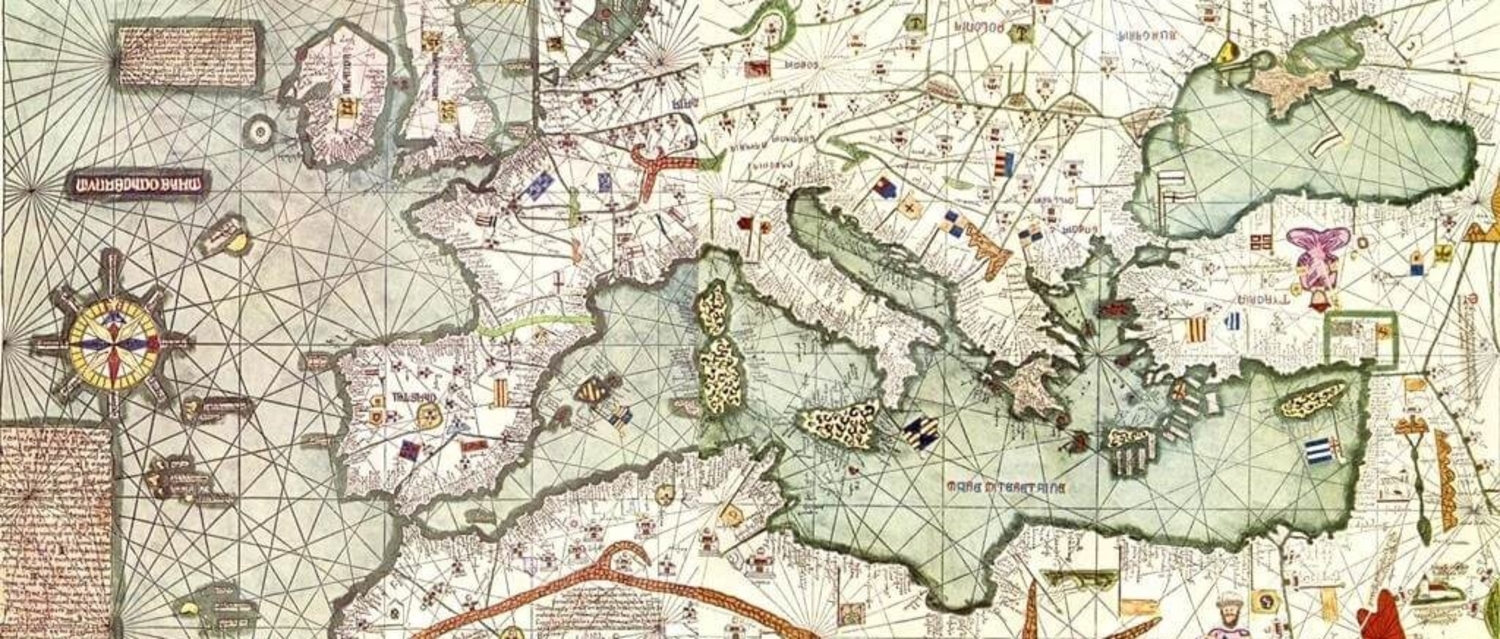
This is a collection of additional documents—beyond sales, leasing, insurance, and manumission contracts—relating to enslaved men and women enacted in the late medieval and early modern Mediterranean.
The servant and formerly enslaved Greek woman named Caterina, also known as Passa, who is currently a servant for the family of Dario Calvi on a term of service of 12 years, promises to serve the notary Biaggio de Axereto for eight years less one month, that is, for the time in which she has remaining on her service contract to Dario. Dario receives forty eight Genoese lire from the Biaggio for the lease of the remainder of her contract.
The slaveholder and nun named sister Argenta Salvaiga, abbess of the monastery of San Sepolcro di Sampierdarena issues a quittance to Bartolomeo Doria for 5 Genoese lire she had received from him. The amount was represented the remainder owed from a sale earlier in the same year of an enslaved woman by Argenta to Domenico Bartolomeo for 130 Genoese lire and recorded by the notary Giacomo de Bargalio. Domenico Bartolomeo was not present during the transaction and was represented by the enacting notary Giovanni Loggia, who had remaining 5 lire from Antonio de Sarzana, named as the factor of Domenico Bartolomeo.
The slaveholders Gabriele Doria and Battista Richeme enter into an agreement regarding the sale of an enslaved woman who had been sold by Gabriel to Battista at some earlier date. The enslaved woman had been sold for 140 Genoese lire, with a payment made in a measure of cloth valued at 106 lire and the remaining 34 lire in money of account. Battista noted that the enslaved woman was suffering from a lack of menstruation and that the statutes of the commune of Genoa allowed that she be returned due to a violation of the health clause in the original sales contract. The two men agreed that should the enslaved woman be unable to menstruate within four months, then she could be returned into the possession of Gabriele and the cloth and account money returned to Battista.
The slaveholder named Eliana Negrone manumits an enslaved woman named Maddalena who had been transfered into the custody of Eliana as a partial return of her dowry against the estate of her deceased spouse Illario Squarciafico. This transfer is valued at 70 Genoese lire towards the larger (and unspecified) dotal liability. The enslaved Maddalena agrees to serve in the household of Eliana and her family for a term of five years as a condition of the manumission. The contract states that if, at any point, Maddalena wants to exit the term of service, then she must pay the sum of 6 lire per year for the remaining time to Cosmo and Raffaele Squarciafico, the sons of Eliana. The sons retain the right of patronage, which is renounced by Eliana.
The slaveholder named Maria Spinola manumits an enslaved woman named Andreola under the condition that she continues to serve Maria for a term of five years. Maria and her heirs retain the right of patronage. The contract was extracted.
This declaration documents the sale by public auction of an enslaved woman named Maddalena to a slaveholder named Cesare Cattaneo, for 220 Genoese lire. The declaration notes that the enslaved Maddalena was seized from the inheritance of the deceased Giacomo Marchione and that Cesare having offered the best price at the public auction.
The slaveholder named Cosmo Lomellini manumits an enslaved baptized Muslim named Caterina, whom he had purchased in the Iberian as a child at least 16 years earlier. She agrees to serve Cosmo for an additional ten years as a condition of manumission. The contract also states that Caterina cannot enter into a service or employment agreement without the consent of Cosmo and that she may also not enter into marriage without his consent. The enslaved Caterina is absent during the manumission and is represented by the enacting notary Girolamo Loggia. Cosmo retains the right of patronage.
The slaveholder and banker named Teramo Centurione manumits an enslaved baptized Muslim man named Giacobino, who is approximately 25 years of age, under the condition that Giacobino pays 125 Geneose lire for his freedom. Teramo retains the right of patronage.
The slaveholder named Baldassare Negrone manumits an enslaved baptized Jewish woman named Anna, who is approximately 28 years of age, under the condition that she continues to serve in the household of Baldassare for an additional seven years.
The slaveholders Pellegro Salvago and his spouse Battistina Rau manumit an enslaved baptized Muslim woman named Margarita, who is approximately 18 years of age, under the condition that she serve Pellegro and Battistina for the remainder of their lives.
The slaveholder named Franco Fieschi releases the coat-maker named Giovanni de Aragonis from a debt of 15 Genoese ducats that was used for the redemption of the enslaved Jewish woman named Anna, who was the sister of Giovanni, and who was freed in a contract enacted in 1506.
The slaveholder named Benedetto Boilo procures a tanner named Guglielmo de Varcio to sell a family of enslaved persons. The family consists of two parents (one man and one woman) and their two children and are all described as Tatars.
The slaveholder named Leonello Lomellini manumits an enslaved Tatar man named Francesco under the condition that Francesco serve Leonello for the remainder of his (Leonello's) life. The manumission replaces an earlier contract enacted on 11 January 1413 by the notary Giovanni de Diano that required Francesco to serve Leonello for a term of 12 years after which he would be manumitted. The contract was extracted.
The slaveholder named Raimondo Bisaccia manumits an enslaved Tatar woman named Cristiana, who agrees to serve Raimondo and his son Raffaele for the next eight years as a condition of the manumission.
The formerly enslaved Tatars named Giovanni and Margarita agree to serve Luciano Imperiale for a term of ten years. Giovanni had been formerly held by Luciano and Margarita had just been manumitted on the same day by the nuns of the monastery of Santi Giacomo e Filippo. Pietro Imperiale serves as the procurator for the formerly enslaved Giovanni.
The slaveholder named Anfreone Centurione issues a declaration protesting against the marriage of two enslaved persons that he is holding—an enslaved man Giacobino and an enslaved woman Margarita—saying that he did not consent to their marriage.
The slaveholder and knight named Antonio Bico, who is the commissioner of Montepulciano, manumits an enslaved woman from the Canary Islands named Caterina de Salè, whom he had purchased from Girolamo Spinola about six years previously, upon which Caterina immediately enters into marriage with the formerly enslaved man named Cola Gobita. Antonio donates 52 to Caterina, which the contract notes was her purchase price. The newly married Caterina and Cola promise to serve Antonio and his family for a term of 15 years as a condition of the manumission and donation.
This document represents the confirmation of the manumission of Papacosta Chrimeli made by Robert de Juilly in 1377, with relevant documents being producted, on account of the children of Papacosta being impressed for marine service.
The manumission recorded by the Knights of Rhodes of an enslaved person named Antonio Ismailii (who may have been Jewish) under the condition of an unspecified payment.
The manumission recorded by the Knights of Rhodes of an enslaved person named Maria Sequiadia. The manumission states that the Maria must continue to serve her former holder, whose name is not specified, for the remainder of the holder's life.
The manumission recorded by the Knights of Rhodes of an enslaved person named Erini de Maquidioci. The manumission states that Erini must continue to serve her former holder, whose name is not specified, for the remainder of the holder's life.
The manumission recorded by the Knights of Rhodes of an enslaved person named Nikolaos de Monovassia. The manumission states Nikolaos must continue to serve his former holder, whose name is not specified, for the remainder of the holder's life.
The manumission recorded by the Knights of Rhodes of an enslaved person named Philippos de Hiotii. The manumission states Philippos must continue to serve his former holder, whose name is not specified, for the remainder of the holder's life.
The manumission recorded by the Knights of Rhodes of an enslaved person named Michális de Saloniqui. The manumission states Michális must continue to serve his former holder, whose name is not specified, for the remainder of the holder's life.